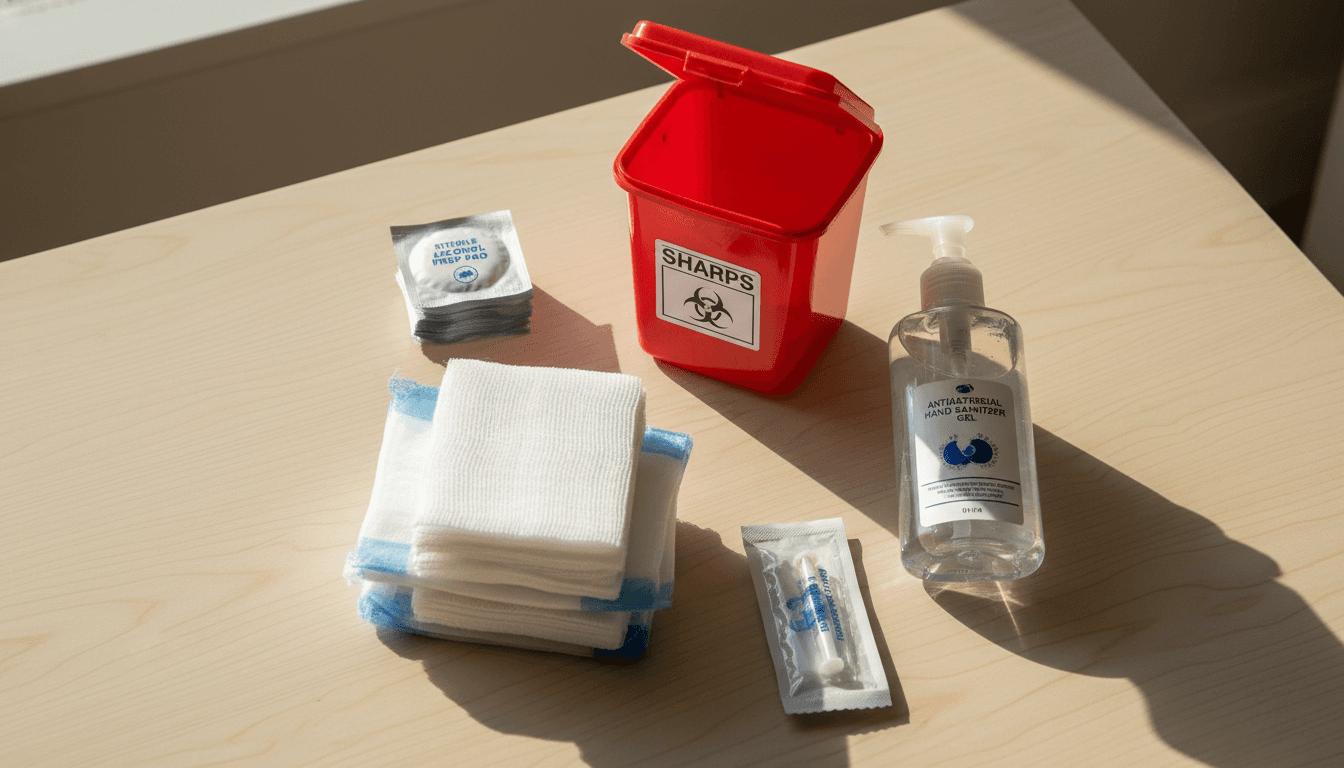
Where to keep syringes, needles and bacteriostatic water, what the sterile packaging protects, and which expiry date applies.
Key points
- 01The sterile wrapper is the storage container. A syringe or needle stays sterile because its individual wrapper is intact, so it stays wrapped until the moment you use it. A needle loose in a drawer is no longer a sterile device, whatever it looks like, and it goes in the sharps bin rather than into a vial.
- 02Room temperature, dry, out of direct light. Devices are made for ordinary room storage, so a cupboard or a closed box is right and the refrigerator is not. Cold packaging brought into a warm room draws condensation onto and into the wrapper, which is the practical reason not to store supplies with the medicine.
- 03Devices carry their own expiry date. The date printed on a syringe or needle box refers to the sterility of the packaging, not to a chemical going off. Past that date the device is treated as no longer sterile, which is why a forgotten box at the back of a drawer is worth checking before an order arrives.
- 04An opened diluent bottle runs its own clock. Bacteriostatic water contains a preservative that supports repeat entry over a limited period; sterile water for injection carries no preservative and is treated as a single entry. Write the date of first entry on the bottle, exactly as you would on a multiple-dose vial.
- 05Keep the kit together and away from humidity. One box holding syringes, swabs, diluent and your log makes a missing item obvious before you start. A bathroom cabinet is the one place to avoid, because repeated warm humidity is hard on paper backing and cardboard, and the sharps container needs to be within reach of where you inject.
- 06Use the oldest stock first, and check dates on arrival. When a new order comes in, put it behind what you already have and check the dates on both. Rotating stock is how supplies actually get used before their sterility dates rather than accumulating in a drawer, and it takes about a minute per delivery.
Frequently asked questions
Do syringes and needles need refrigeration?+
No. They are made for ordinary room-temperature storage, dry and out of direct light. Refrigerating them risks condensation on and inside the wrapper when they warm up. Educational information only, not medical advice.
What does the expiry date on a syringe box mean?+
It refers to the sterility of the packaging rather than to a substance degrading. Past that date the device is treated as no longer sterile, so it is worth checking dates when a new order arrives.
How long is an opened bottle of bacteriostatic water good for?+
It supports repeat entry for a limited period because of its preservative, unlike sterile water for injection, which is treated as a single entry. Write the date of first entry on the bottle and follow the product labelling.
Where is the worst place to keep injection supplies?+
A bathroom cabinet. Repeated warm humidity is hard on paper backing and cardboard, and a compromised wrapper means the device inside is no longer a sterile one.