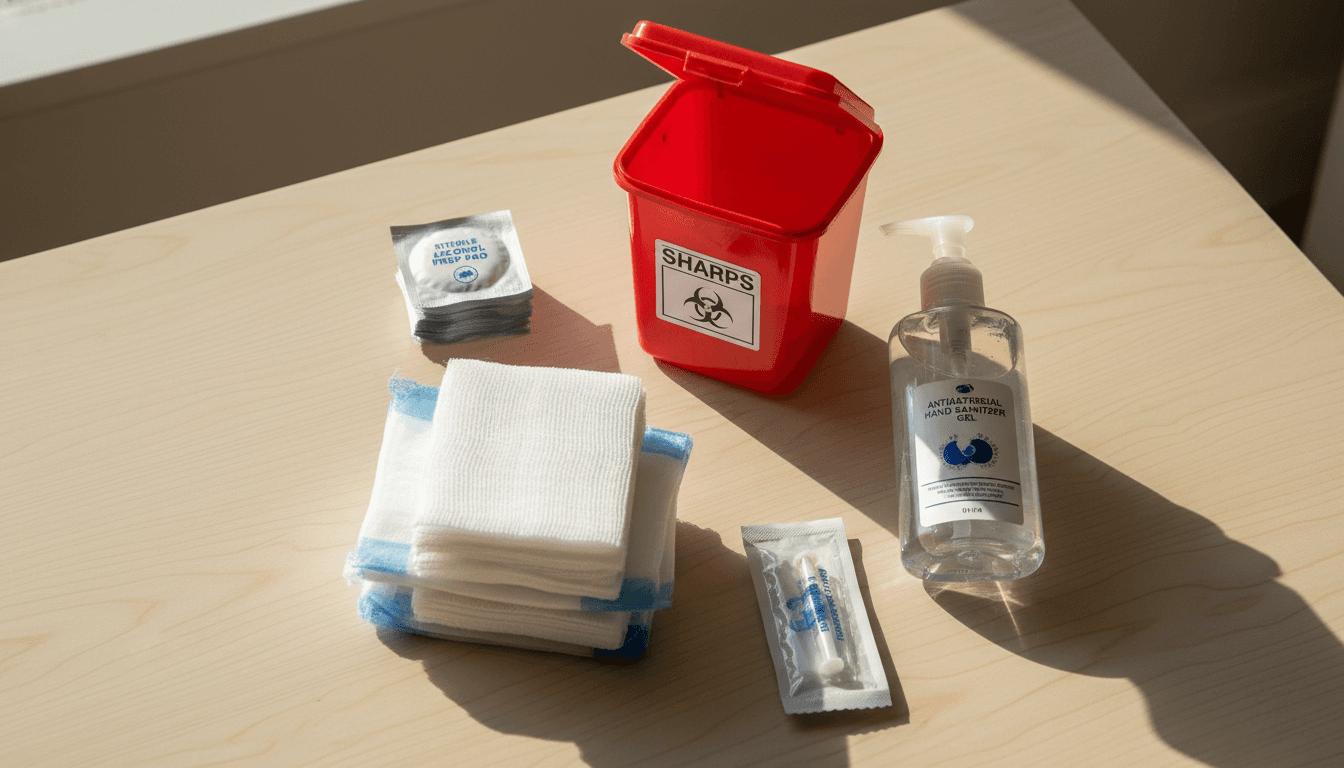
Six things a syringe, needle or diluent listing must state, and what a missing sterility claim, lot number or expiry date tells you.
Key points
- 01No sterility statement and no single-use marking. A syringe or needle intended for injection is labelled sterile and single use, and the listing should say so in the product description rather than in a review. Absence of that claim is not an oversight in a category where sterility is the entire point of the packaging.
- 02No lot number or expiry date anywhere in the photos. Devices carry a lot number and a sterility expiry on the box and often on each wrapper. A listing whose images crop both out leaves you unable to check whether stock is current or to reference a batch if something is wrong with it.
- 03Gauge, length and barrel volume not stated. Needle gauge, needle length and barrel capacity are the three specifications that decide whether a syringe suits your dose at all. A listing that offers a picture and a price instead of those numbers cannot be matched against the figures in our needle-size and syringe-size guides.
- 04Packaging that is not individually sealed. Loose syringes in a bag, a resealed box, or images showing an opened blister all break the chain the sterility claim depends on. A device is sterile because its individual wrapper is intact, so damaged or absent wrapping voids the claim regardless of what the listing says.
- 05A diluent offered outside a pharmacy channel. Bacteriostatic water for injection is a pharmaceutical product made to a published monograph, and where it is a prescription item depends on your jurisdiction. FDA has published warnings about unapproved and counterfeit injectable products sold outside legitimate channels, and a pharmacist is the right person to ask about a supply route.
- 06No manufacturer named and no route to report a problem. A named manufacturer is what makes a complaint, a recall notice or a report to a regulator possible. Listings that name only a marketplace seller leave you with nothing to file against, which is the practical reason to care rather than a bureaucratic one.
Frequently asked questions
What should an injection-supply listing always state?+
Sterile and single use, the lot number and expiry visible on the packaging, and the gauge, length and barrel volume. Missing specifications are the most common warning sign. Educational information only, not medical advice.
Is loose packaging really a problem?+
Yes. A device is sterile because its individual wrapper is intact. Syringes loose in a bag, an opened blister, or a resealed carton break the only thing the sterility claim rests on, whatever the description promises.
Where should bacteriostatic water come from?+
A legitimate pharmacy channel, and whether it needs a prescription depends on where you live. FDA has warned about unapproved and counterfeit injectable products sold outside those channels; ask a pharmacist rather than a marketplace seller.
Why does the manufacturer's name matter?+
Because it is what a recall notice, a product complaint or a regulator report attaches to. If only a marketplace seller is named, there is no manufacturer to report a defective batch to.