Add-ons that do not earn a place in a home injection kit, from vial shakers to needle clippers, and the short list that does.
Key points
- 01A more expensive brand of diluent. Bacteriostatic water for injection is made to a published monograph, so the specification is the specification. What decides your concentration is the volume you measure and the sterility of your handling, as our post on why the volume matters works through.
- 02Vial warmers and mechanical shakers. Peptide and GLP-1 solutions do not want mechanical energy. Shaking creates foam and shear at the air interface, both documented stress conditions in the protein-stability literature, and a warming gadget adds a temperature variable to something with an already narrow storage window.
- 03Numbing sprays and vibration gadgets. Buzzing clips, cold sprays and pressure devices are sold against a problem that a short needle, a fully dry site, room-temperature medication and an unhurried push mostly solve for free. Our injection-site pain post lists those changes in order.
- 04Anything that claims to make a needle reusable. Needles are single use. No wipe, dip, flame or gadget makes a used needle sterile again, and the dulled tip is why reuse hurts more and traumatises tissue more. This is the one item on the list that is not merely a waste of money.
- 05A dedicated medication fridge, in most homes. A shelf in the middle of your own refrigerator, away from the back wall and away from the door, usually sits in the same 2 to 8 °C range a specialist unit advertises. The purchase that actually adds information here is a cheap fridge thermometer.
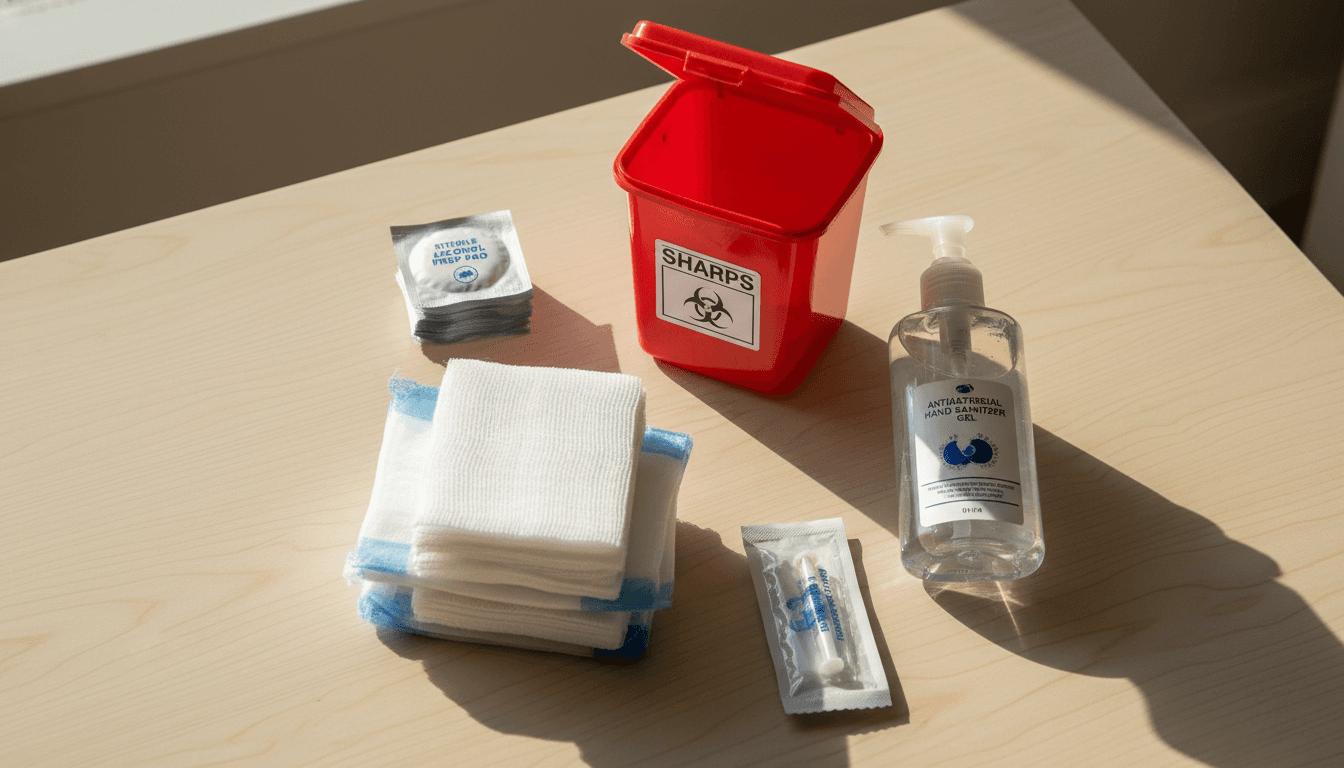
- 06Sharps products that are not sharps containers. Needle clippers, melting devices and thick plastic bottles are not the documented route. An FDA-cleared, puncture-resistant sharps container is, and our disposal guides cover the fill line, the seal and where a full container goes next.
Frequently asked questions
What do I actually need for a home injection?+
Sterile single-use syringes or pen needles in the right size, alcohol pads, a puncture-resistant sharps container, and the diluent your product calls for. Almost everything else is optional. Not medical advice.
Are premium alcohol pads worth it?+
The specification is what matters, not the brand: individually sealed, 70 percent isopropyl alcohol, still in date. Our alcohol pad guide explains what to read on the box.
Do I need a special fridge for my medication?+
Usually not. A shelf in the middle of the fridge, away from the back wall and the door, holds the right range. A fridge thermometer is what tells you whether yours actually does.
Is a needle clipper a disposal solution?+
No. Used needles go point-first into an FDA-cleared, puncture-resistant sharps container, which the FDA sharps guidance describes, and the sealed container then goes to a proper disposal route.