Zepbound is allowed up to 21 days at no more than 30 C. How to pack pens or vials, clear security, plan a dose day and handle sharps.
Key points
- 01The 21-day allowance is the number your trip plan hangs on. The Zepbound label stores the product in a refrigerator at 36 to 46 F, which is 2 to 8 C, and allows storage for up to 21 days at room temperature up to 86 F, which is 30 C. Twenty-one days is a total for that device, not a fresh allowance per trip, so a pen that already spent a week on a counter has fourteen days left.
- 02Short trips often need no cooler at all. For a trip inside the 21-day window in a climate that stays under 30 C, a padded case that protects the device from crushing and light is enough. The failure mode on short trips is almost never warmth, it is a pen at the bottom of a bag under a laptop, or a device left in a car.
- 03Long trips and hot climates need a cooler that holds 2 to 8 C. Once the trip is longer than the room-temperature allowance, or the ambient temperature will exceed 30 C, you need a travel cooler rated to hold the refrigerated range without freezing. Our travel case guide covers the difference between an insulated pouch, a phase-change wallet and a powered cooler.
- 04Never freeze it, and never let it touch a frozen gel pack. The label says do not freeze, and a device that has frozen is discarded even if it thaws looking normal. Direct contact with a hard frozen pack can take the solution below zero locally, so a cloth layer between pack and device is not optional. Freezing is the most common way a cooler ruins a medication.
- 05Carry-on only, never checked. The hold is not temperature controlled and your bag may not arrive with you. Every part of the kit travels in the cabin: the medication, the sharps container, the alcohol swabs and the paperwork. This is also the reason the spare dose goes in the same bag rather than a separate one.
- 06At the security checkpoint, declare and separate. In the United States, medically necessary liquids are permitted in quantities greater than 3.4 ounces, and passengers are told to declare them to the officer and present them separately for inspection. Ice packs and gel packs used to cool medication are covered by the same allowance, and may be inspected.
- 07Take the carton, not just the device. The original carton carries the pharmacy label with your name, the product, the strength and the prescriber. It also carries the instructions for use and the lot number. A loose pen in a pouch answers none of the questions a border officer or a foreign pharmacist might ask.
- 08For international trips, ask for a letter. A short signed letter from your prescriber naming you, the medication, the fact that it is self-administered by subcutaneous injection and that needles are required is worth requesting weeks in advance. Some countries require documentation for injectables, and some require the prescription itself.
- 09Time zones rarely disrupt a weekly medication. The label allows the day of weekly administration to be changed provided at least three days, which is 72 hours, separate two doses. That interval absorbs almost any time-zone move. What actually causes trouble is losing track of which day it is, which is why the record travels with you.
- 10Hotel fridges freeze things, so test before you trust. Minibar and small hotel fridges frequently run below the refrigerated range and have no reliable thermostat. Put a bottle of water in first for a few hours and check for ice crystals before committing the medication, or keep the device in your cooler and treat the room fridge as a bonus.
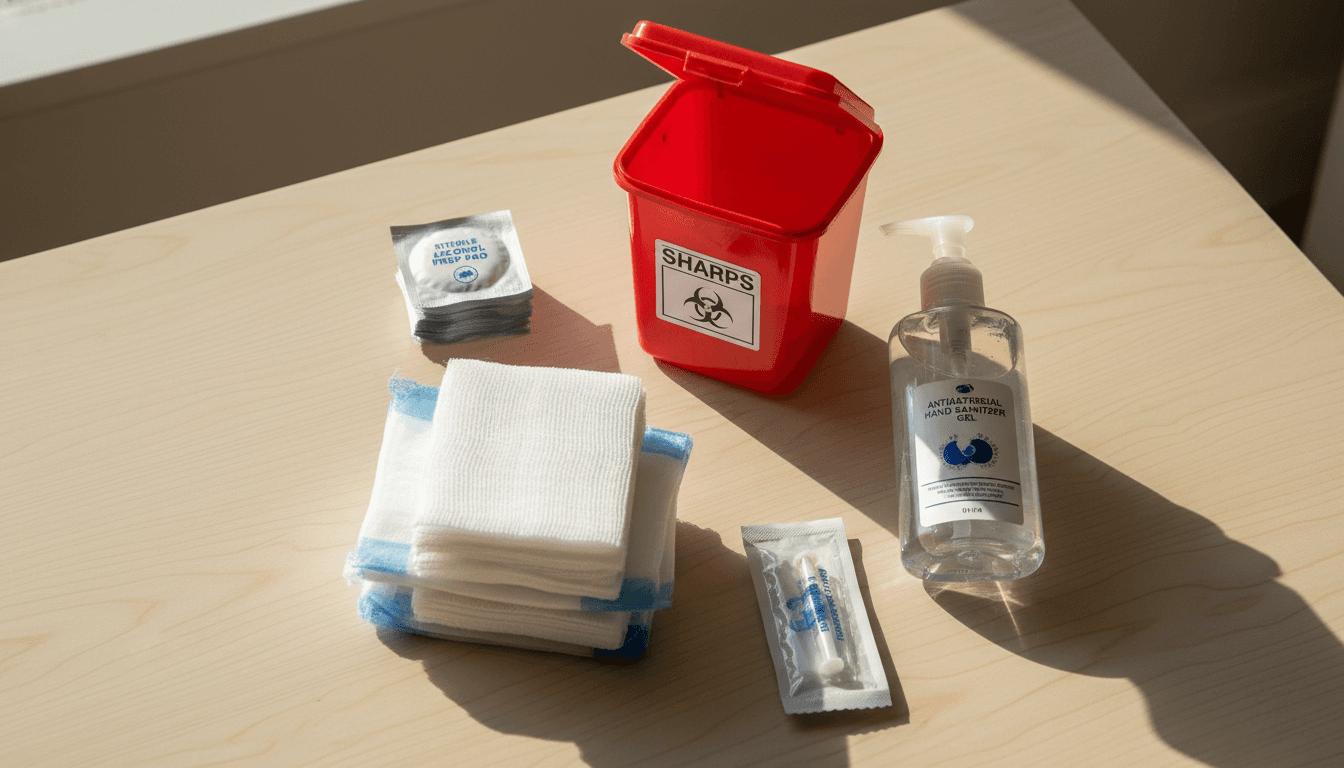
- 11Sharps travel with you and come home with you. Do not put a used needle or a used pen in a hotel bin, and do not carry a loose used device in a bag. A small travel sharps container closes the problem, and many trips end with the container coming home to your usual disposal route. Our sharps disposal guide covers the local options.
- 12In a car, the glovebox and the boot are the two worst places. A parked car interior can climb far past 30 C in an hour, and the boot and glovebox are the hottest parts of it. On a road trip the medication rides in the cabin with you, in a cooler, and comes into the hotel at every stop rather than staying in the car overnight.
- 13The one-page pack list. Devices plus one spare dose, original carton and pharmacy label, instructions for use, cooler and packs, a cloth barrier, alcohol swabs, gauze, a travel sharps container, the prescriber letter for international trips, your injection record, and photographs of everything stored offline.
- 14Book the pharmacy conversation before the flights. An early refill for a trip, a spare device, or a travel letter all take lead time and sometimes an insurer's agreement. Asking three weeks out turns each of those into a routine request, while asking three days out turns them into a problem somebody has to make an exception for.
- 15Split nothing, but photograph everything. The kit stays together in one carry-on, because splitting it across bags is how half of it goes missing. What does get duplicated is the paperwork: photographs of the carton, the pharmacy label, the prescription and the travel letter, stored both offline on the phone and in the cloud.
- 16Know the two temperatures you are defending against. Above 30 C the room-temperature allowance no longer applies, and below 0 C the device is finished. A cooler that solves one can cause the other, which is why the cloth barrier and a thermometer strip matter more than the size of the bag.
- 17Cabin conditions are fine, the aircraft hold is not. The passenger cabin sits comfortably inside the room-temperature range for the length of any flight. The hold is neither temperature controlled nor accessible, which is the practical reason the medication travels with you rather than the security one.
- 18Plan the dose day around the trip, not the trip around the dose day. With at least three days between doses available as flexibility, most trips can be arranged so the injection happens at home before departure or after arrival, rather than in an airport bathroom. Confirm any planned shift with your prescriber and write the dates down.
- 19A festival, a cruise or a campsite is a different problem from a hotel. No reliable mains power, no fridge you control and no pharmacy nearby is the hardest version of this. That is where a passive cooler rated for the full trip length, plus a written plan for what happens if it fails, stops being over-preparation.
Pre-injection checklist
- ✓Read the storage panel in the instructions for use in your carton before you pack. The numbers below come from the current US label, and labels are revised.
- ✓Count the doses the trip actually needs, then add one. A spare dose is cheaper than an interrupted week away from your pharmacy.
- ✓Photograph the carton, the pharmacy label and your prescription, front and back, and store the images offline as well as in the cloud.
- ✓Check whether your destination restricts the medication or requires documentation, and allow time to arrange a letter if it does.
- ✓This is a packing and logistics guide, not medical advice. Dose timing and any change to your schedule are decisions for your prescriber.
After the injection
- Log every dose taken away from home with the date and the local time zone, so the interval to the next dose is provable rather than remembered.
- When you get back, check the device against the storage panel again: total days out of the fridge is cumulative across the whole life of that device.
- Empty the travel sharps container into your usual disposal route rather than leaving it packed in the bag for the next trip.
Common mistakes
- The device has frozen, or you found ice in the cooler or the fridge compartment it was in. Do not inject it, and contact your pharmacy.
- The solution is cloudy, discoloured or has visible particles after transport. The label describes it as clear and colourless before use.
- The device was left in a hot car or in direct sun and you cannot establish how hot it got or for how long. Treat that as a question for the pharmacy, not a judgement call at the injection site.
- You are unwell abroad and considering skipping or moving a dose. That is a call to your prescriber or a local clinician, not a travel decision.
Frequently asked questions
How long can Zepbound stay out of the fridge?+
The label allows up to 21 days at room temperature up to 86 F, which is 30 C, and it is a total for that device rather than a fresh allowance per trip. Refrigerated storage is 36 to 46 F, which is 2 to 8 C. Educational information only, not medical advice.
Can I take Zepbound through airport security?+
In the United States, medically necessary liquids are allowed in quantities above the usual limit if declared to the officer and presented separately for inspection, and cooling packs used with them are covered too. Expect the items to be screened.
Should it go in my checked bag?+
No. The hold is not temperature controlled and bags are separated from passengers regularly. Medication, sharps container and paperwork all travel in the cabin.
Do I need a letter from my doctor?+
For domestic trips the pharmacy label on the carton is usually enough. For international travel a short signed letter naming you, the medication and the need for needles is worth requesting in advance, and some countries require more.
What if the hotel fridge freezes it?+
A frozen device is not used, even if it thaws looking normal. Test an unfamiliar fridge with water first, or keep the medication in your own cooler and treat the room fridge as optional.
Can I move my injection day for a trip?+
The label allows the weekly day to change as long as at least three days, meaning 72 hours, separate two doses. Confirm any planned change with your prescriber and write down the actual dates you injected.
Where do I put used needles while travelling?+
In a small hard travel sharps container that closes, carried with you and emptied into your usual disposal route at home. Hotel bins and loose devices in bags are how other people get stuck.
How far ahead should I talk to the pharmacy?+
About three weeks for a trip that needs an early refill, a spare device or a travel letter. Each of those is routine with notice and difficult without it.
Should I split the kit between two bags?+
No. Keep it together in one carry-on, since split kits are how half a kit goes missing. Duplicate the paperwork instead, with photographs stored offline and in the cloud.
Is the aircraft cabin warm enough to be a problem?+
No. The cabin sits inside the room-temperature range for the length of any flight. The hold is the problem, because it is neither temperature controlled nor reachable.
Sources
- Eli Lilly. Zepbound (tirzepatide) Prescribing Information (US label).
- Transportation Security Administration. Special procedures, including medications and medically necessary liquids.
- FDA. Safely using sharps at home, at work and on travel.
- SafeNeedleDisposal.org. State-by-state sharps disposal guidance.