Zepbound stores at 2 to 8 C, or up to 21 days at no more than 30 C. What the 21 days actually counts, and when a device must be discarded.
Key points
- 01The default home is the refrigerator at 2 to 8 C. The label stores Zepbound in a refrigerator at 36 to 46 F, which is 2 to 8 C. That is the storage condition the expiry date on the carton assumes. Everything else in this guide is an allowance layered on top of it, not an alternative to it.
- 02Up to 21 days at no more than 30 C, and it is cumulative. The label allows storage for up to 21 days at room temperature up to 86 F, which is 30 C. The important word is up to: 21 days is a total for the life of that device, not a fresh allowance each time it leaves the fridge. Three separate week-long trips use it all.
- 03Do not freeze it, and a frozen device is finished. The label says do not freeze. A device that has frozen is discarded even if it thaws looking perfectly clear, because freezing can damage the protein without any visible sign. This is the failure mode that kills the most medication in practice, and almost all of it happens in a fridge that runs cold.
- 04Keep it in the original carton to protect from light. The label directs storing the product in its original container to protect it from light. That carton also carries the pharmacy label, the lot number, the expiry and the instructions for use, which is a second reason not to throw it away and store loose pens in a drawer.
- 05Where in the fridge matters more than people expect. The door swings through the widest temperature range and the back wall of many domestic fridges runs below freezing. The middle of a shelf, away from the back wall and away from the door, is the stable zone. A cheap fridge thermometer settles the question for the price of one lost pen.
- 06Single-dose vials store the same way. The vial presentation follows the same refrigerated range, the same 21-day room-temperature allowance and the same do-not-freeze rule as the pen. What differs is after opening: a single-dose vial is used once and discarded, so there is no in-use storage question to answer for it at all.
- 07Write the date you took it out of the fridge. The 21 days can only be tracked if the clock has a start. A date written on the carton in pen at the moment it leaves refrigeration is the entire system. Without it, most people either bin a usable device or use one that has been out for a month, and both mistakes are expensive.
- 08The expiry date and the 21 days are two separate limits. Whichever comes first governs. A device that still has fifteen room-temperature days left is not usable past the printed expiry, and a device well inside its expiry is not usable after its 21 days are spent. People routinely track one and forget the other.
- 09Warming a cold device before injecting is comfort, not storage. Letting a refrigerated device sit out for a short while before the injection is about reducing sting, and patient-education literature links cold injections to more discomfort. That is not a reason to leave the device out permanently, and any time it spends out still counts toward the 21 days.
- 10Never use a hot car, a windowsill or a bathroom. A parked car passes 30 C quickly, a windowsill delivers direct sun and a bathroom cycles humidity and heat with every shower. None of these are covered by the room-temperature allowance, which assumes a controlled indoor temperature rather than a peak one.
- 11Look at the solution before every dose. The label describes the solution as clear and colourless to slightly yellow. Cloudiness, discolouration or visible particles mean stop and call the pharmacy rather than inject and hope. This check costs three seconds and is the only quality control available at home.
- 12A power cut has its own procedure. Keep the door closed, note how long the outage lasted, and check the fridge temperature before assuming the contents survived. Our post on refrigerated medication during a power outage covers how long a closed fridge holds and what to ask the pharmacy afterwards.
- 13Storage and child safety are different problems. The refrigerator is the one storage location in a house that a small child can reliably open, so a refrigerated pen still belongs inside a closed, labelled box. Our post on keeping injection supplies away from children covers the medicine and the needle as two separate hazards.
- 14Buy a fridge thermometer before you buy anything else. Domestic refrigerators are rarely calibrated and frequently run outside 2 to 8 C somewhere inside. A cheap thermometer left on the shelf you use for a couple of days tells you whether your storage plan is real or theoretical, and it costs a fraction of a single device.
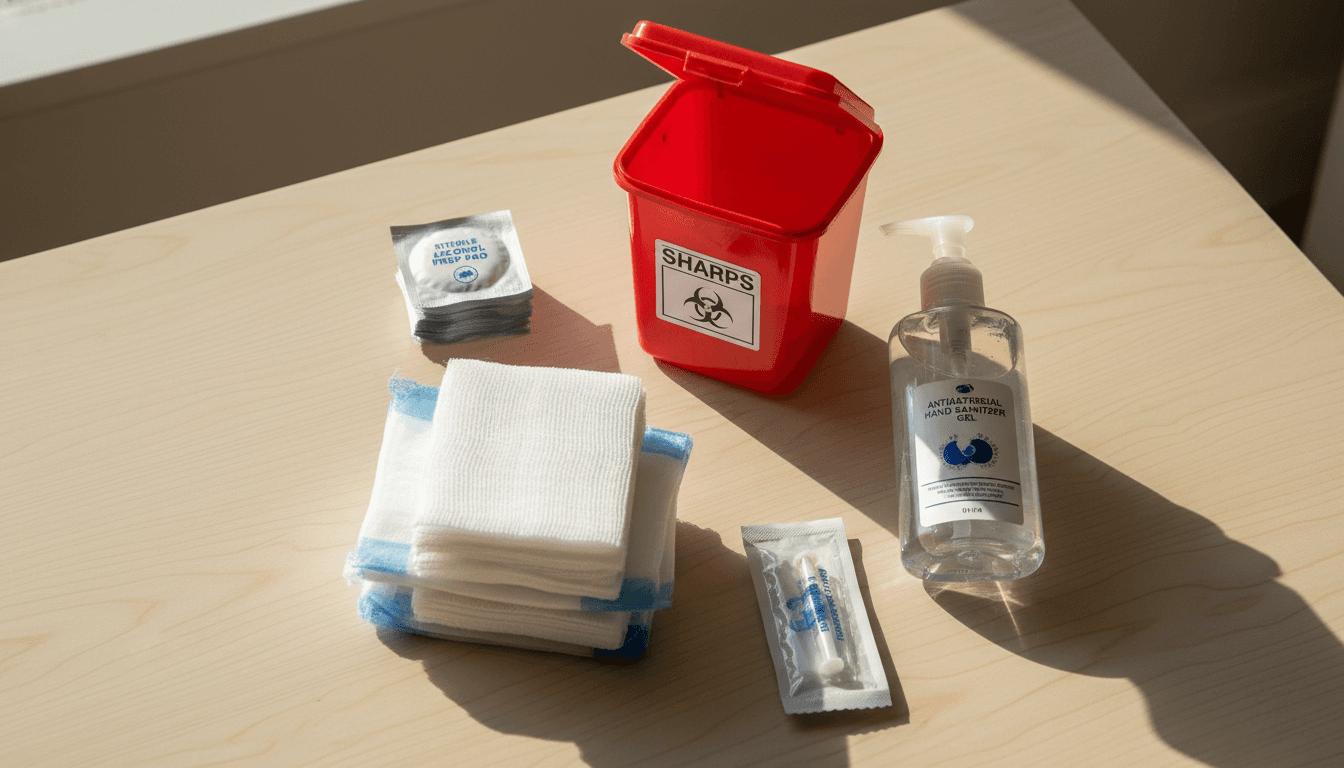
- 15Group the whole kit in one labelled box. Devices, spare needles if your presentation uses them, alcohol swabs and the record card in one closed container on a shelf. That solves three problems at once: light protection, a child-resistant layer inside the fridge, and never hunting for a swab at the moment you are holding a device.
- 16Deliveries arrive cold, and the clock starts when you unpack. A mail-order shipment travels in a cooler, and the 21 days do not start until it stops being refrigerated. Get it into the fridge promptly, and if a package sat on a doorstep in the heat, that is a phone call to the pharmacy rather than a shrug.
- 17A holiday cottage or a shared fridge is a storage decision. Someone else's appliance, a communal kitchen or a fridge that gets unplugged when the house empties are all failure modes with the same result. If you cannot control the appliance, plan around the 21-day allowance instead and treat the fridge as optional.
- 18Never store it in the freezer compartment to save space. This sounds obvious and it happens anyway, usually when the fridge is full. Freezing ends the device permanently. If space is the problem, the answer is a smaller labelled box rather than the only shelf that guarantees loss.
- 19Keep the storage numbers where the device is. Refrigerated range, days at room temperature, and the discard conditions, written on the carton or on a card in the box. The instructions for use is the governing source and it should live with the device rather than in the recycling, since the numbers are exactly what you cannot look up mid-decision.
Common mistakes
- The solution is cloudy, discoloured or contains visible particles. Do not inject it and contact your pharmacy.
- The device has frozen, or you have found ice in the fridge compartment where it was stored.
- The device has been out of the fridge longer than 21 days in total, or has been above 30 C.
- The pen or vial is cracked, leaking or was dropped hard enough to damage it. Our post on a dropped pen or vial covers what to check.
- You cannot establish how long a device was out or how hot it got. That is a question for the pharmacy rather than a judgement call at the injection site.
Frequently asked questions
Does Zepbound have to be refrigerated?+
The label stores it at 36 to 46 F, which is 2 to 8 C, as the default. It also allows up to 21 days at room temperature up to 86 F, which is 30 C, as a total across the life of that device. Educational information only, not medical advice.
How long can Zepbound be out of the fridge?+
Up to 21 days at no more than 30 C, and the days are cumulative rather than resetting each time. Write the date it first left refrigeration on the carton, because that is the only practical way to count.
What if my Zepbound froze?+
Do not use it, even if it thaws looking clear. Freezing can damage the medication without any visible change. Contact your pharmacy, and check your fridge temperature before storing the replacement.
Can I store it in the fridge door?+
It is the worst position in the fridge, because the door swings through the widest temperature range every time it opens. Use the middle of a shelf, away from the back wall, which in many fridges runs below freezing.
Do the vials store differently from the pens?+
No. Same refrigerated range, same 21-day room-temperature allowance and the same do-not-freeze rule. A single-dose vial is used once and discarded, so there is no in-use storage period to track.
Should I warm it before injecting?+
Letting a cold device sit out briefly before injecting is about comfort rather than storage, and cold injections are associated with more stinging. That time still counts toward the 21 days.
What if it sat out longer than 21 days?+
Do not inject it. Call your pharmacy with the strength, the lot number and how long it was out. Our post on medication left out of the fridge covers what that call involves.
How do I know my fridge is actually in range?+
Put a thermometer on the shelf you use and read it over a couple of days. Domestic fridges are rarely calibrated and often run outside 2 to 8 C somewhere inside, most commonly too cold at the back wall.
My delivery sat outside in the heat. Is it still usable?+
Call the pharmacy with the product, the strength and how long the package was out. Do not decide that one at the injection site, since you cannot see heat damage in a clear solution.
Can I keep it in the freezer compartment if the fridge is full?+
No. Freezing ends the device permanently, whatever it looks like afterwards. If space is the problem, use a smaller labelled box rather than the freezer.