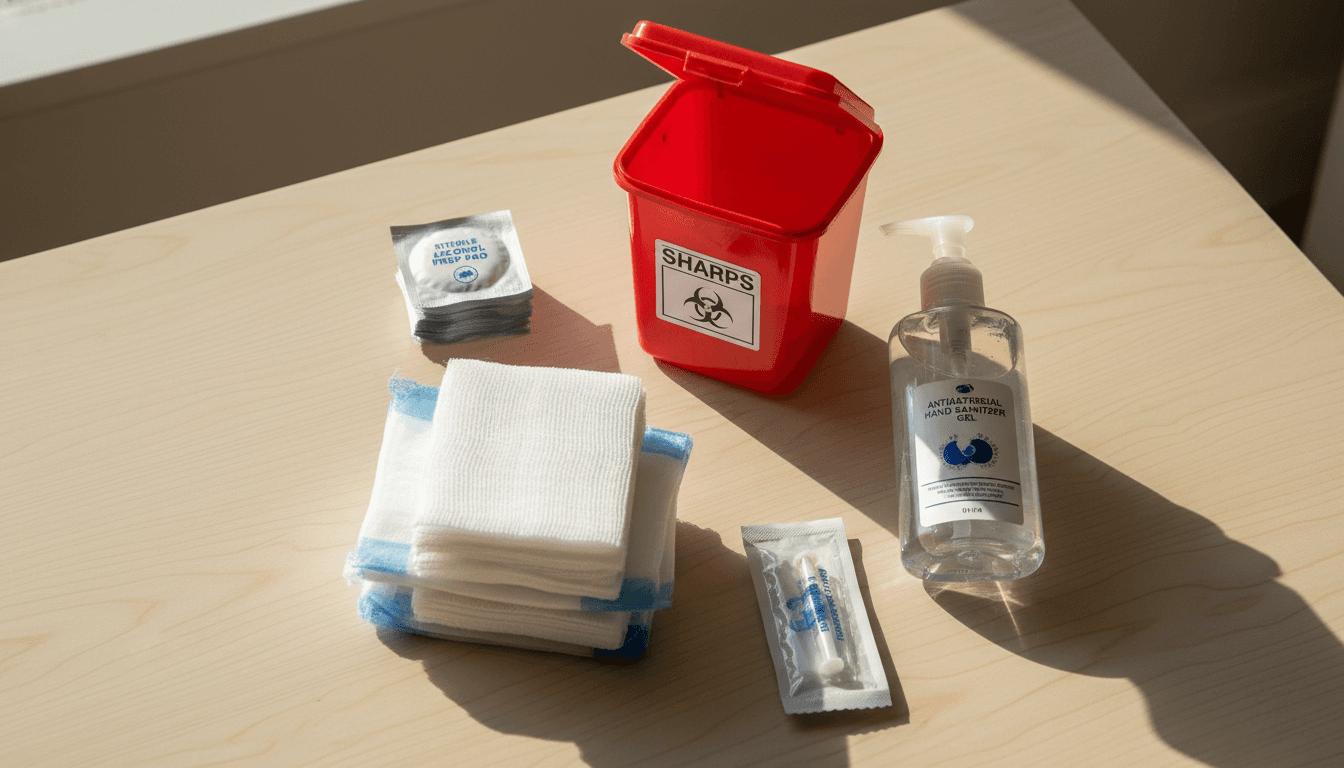
A used pen is two disposal problems: a sharp and a medicine. What goes in the sharps container, what your area allows, and where take-back works.
Key points
- 01One object, two separate disposal problems. A used Ozempic pen is a sharp because of the needle and a medicine because of what is left in the cartridge. Those are governed by different rules, and treating the whole thing as one item is why so many people get it wrong. Solve the needle first, then decide what to do with the pen body.
- 02The needle goes into a hard container immediately. Public guidance is consistent: used needles and other sharps go straight into an FDA-cleared sharps disposal container, or a heavy-duty plastic household container if one is not available. Immediately means before you press the site, not after you tidy up. That single habit prevents most household needlesticks.
- 03Use the outer cap to remove the needle, and never recap for storage. Guide the outer needle cap back over the needle to unscrew it from the pen, drop the needle into the container, and leave it there. Recapping to put a needle back in a drawer is a different act from using the cap to remove one, and it is the one associated with injuries.
- 04The pen should never be stored with a needle attached. Leaving a needle on the pen lets air into the cartridge and can cause leaking, which affects the next dose. It also means the sharp is loose in your storage box. The needle comes off after every injection, which conveniently means the disposal decision is already made by the time the pen is empty.
- 05A sharps container is not a bottle. A container qualifies when it is hard-sided, puncture resistant, leak resistant, upright and stable, and has a tight-fitting lid that closes. A soft detergent bottle fails the puncture test and a glass jar shatters. Our sharps container guide covers which ones meet the specification and how to size one.
- 06Fill to the line, not to the top. Containers carry a fill line at about three quarters. Past that, closing the lid pushes against packed sharps and is how people get stuck at the last step. Seal it at the line, label it if your programme requires it, and start a fresh one rather than compressing the contents.
- 07Where the full container goes depends on where you live. Options include drop-off sites at pharmacies, hospitals or health departments, household hazardous waste collection, mail-back programmes and, in some places, licensed collection services. Rules differ by state and by municipality, and SafeNeedleDisposal.org publishes them state by state.
- 08Never put loose sharps in household rubbish or recycling. A loose needle in a bin bag puts sanitation workers at risk, and a needle in recycling puts sorting-line workers at risk. This is the one part of the guidance that is the same everywhere, and it is the part that matters most to somebody who never chose to be near your medication.
- 09The empty pen body still has medicine in it. A pen that has finished its doses is not empty. It retains residual solution, which is why the pen body is treated as unused medication rather than plastic waste. That is a separate question from the needle, and it is where local rules diverge most.
- 10Take-back is the cleanest answer for the pen body. The FDA directs consumers to drug take-back locations as the preferred way to dispose of most unused medicines, including authorised collectors and periodic take-back events. A pharmacy that accepts take-back will usually tell you in one phone call whether it takes injectable devices.
- 11Do not flush it, and do not recycle it. Ozempic is not on the FDA flush list, and pens are not accepted in kerbside recycling because of the residual medicine and the sharps history. If no take-back is available, follow your local household hazardous waste guidance rather than improvising a third option.
- 12Unused pens you no longer take are a separate case. Pens left over after a switch, a dose change or a stopped prescription should not be kept as backup. Our posts on disposing of unused medication and on switching from Ozempic to Mounjaro cover why a saved pen turns a supply gap into self-treatment.
- 13Keep the full container out of reach until it goes. A sealed container waiting for a drop-off trip is still a hazard if it sits by the bin. Keep it high or wall-mounted, closed, and out of reach of children and pets, exactly as you would while it was in use.
- 14Set the container up before the first injection, not after the last. Almost every household needlestick begins with a used needle put down for a moment because there was nowhere obvious to put it. The container being open and within arm's reach before you start is the whole prevention strategy, and it costs nothing to arrange once.
- 15Mail-back programmes exist and are worth knowing about. Where local drop-off is impractical, mail-back services supply a container and a prepaid return route. They cost money, and for someone in a rural area or without transport they are frequently the difference between correct disposal and a container that lives in a cupboard for years.
- 16Label the container if your programme asks you to. Some collection routes require a container to be marked as sharps or biohazard, and an unlabelled one can be refused at the counter. It is a thirty-second job at the point you seal it, and it saves a wasted trip with a full container in the car.
- 17Travel produces sharps too, and hotel bins are not the answer. A small hard travel container closes the problem for a trip and comes home to your usual route. Our post on injecting away from home covers the packing side, and the same rule applies: nothing loose in a bag, nothing in someone else's bin.
- 18Do not remove the label before you dispose of a pen. The instinct to scratch off your name is understandable, but the pharmacy label identifies the product for whoever handles it, and a take-back counter may need to see it. Cover personal details if you want to, rather than obliterating the whole label.
- 19Ask the question once and write the answer down. One phone call to your pharmacy answers all of it: whether they take sharps containers, whether they take pens, whether the needle must be off first, and what days they accept them. Written on the inside of the cupboard door, that answer serves for years.
Common mistakes
- You or someone in the household has been stuck by a used needle. Wash with soap and water, do not squeeze, and contact a medical service the same day. Our accidental needlestick guide covers the sequence.
- A child has handled a used pen or needle. Contact your poison centre or medical service rather than waiting for symptoms.
- A pet has chewed a pen. Remove the pieces, check for needle fragments and call the veterinary service with the product name and strength in front of you.
- You cannot find any legal disposal route in your area. Call your pharmacy or local waste authority rather than improvising, because loose sharps in household waste put collection workers at risk.
Frequently asked questions
Can I throw an Ozempic pen in the bin?+
Not with a needle attached, and in most places not as ordinary rubbish at all. The needle goes into a sharps container immediately and the pen body is treated as unused medication, usually through a take-back route. Local rules vary, so check yours. Educational information only, not medical advice.
Do I remove the needle before disposing of the pen?+
Yes. Use the outer cap to unscrew the needle, drop it straight into the sharps container, and never store the pen with a needle attached, which can let air into the cartridge and cause leaking.
What can I use as a sharps container?+
An FDA-cleared sharps disposal container, or if one is not available, a heavy-duty plastic household container that is hard-sided, leak resistant, upright and stable with a tight-fitting lid. Not glass, and not a thin bottle.
Where do I take a full sharps container?+
Depending on your area, a pharmacy or hospital drop-off, a household hazardous waste site, a mail-back programme or a collection service. SafeNeedleDisposal.org lists the rules state by state.
Is an empty Ozempic pen really empty?+
No. A pen that has delivered all its doses still contains residual solution, which is why the body is handled as unused medication rather than as plastic waste.
Can I flush the medication or recycle the pen?+
No to both. Ozempic is not on the FDA flush list, and pens are not accepted in kerbside recycling. Use a take-back location, or your local household hazardous waste guidance if none is available.
What do I do with pens I no longer need after a dose change?+
Dispose of them rather than keeping them as backup. Remove and bin any needle, then take the pens to a take-back location. A saved pen is how a supply gap becomes self-treatment.
When should I set up the sharps container?+
Before your first injection, open and within arm's reach. Almost every household needlestick starts with a used needle put down for a moment because there was nowhere obvious to put it.
What if there is no drop-off site near me?+
Mail-back programmes supply a container and a prepaid return route, which is often the practical answer in a rural area or without transport. Your pharmacy can usually point you at one.
Should I scratch my name off the pen first?+
Cover personal details if you want to, but do not destroy the whole label. It identifies the product for whoever handles it next, and a take-back counter may need to read it.