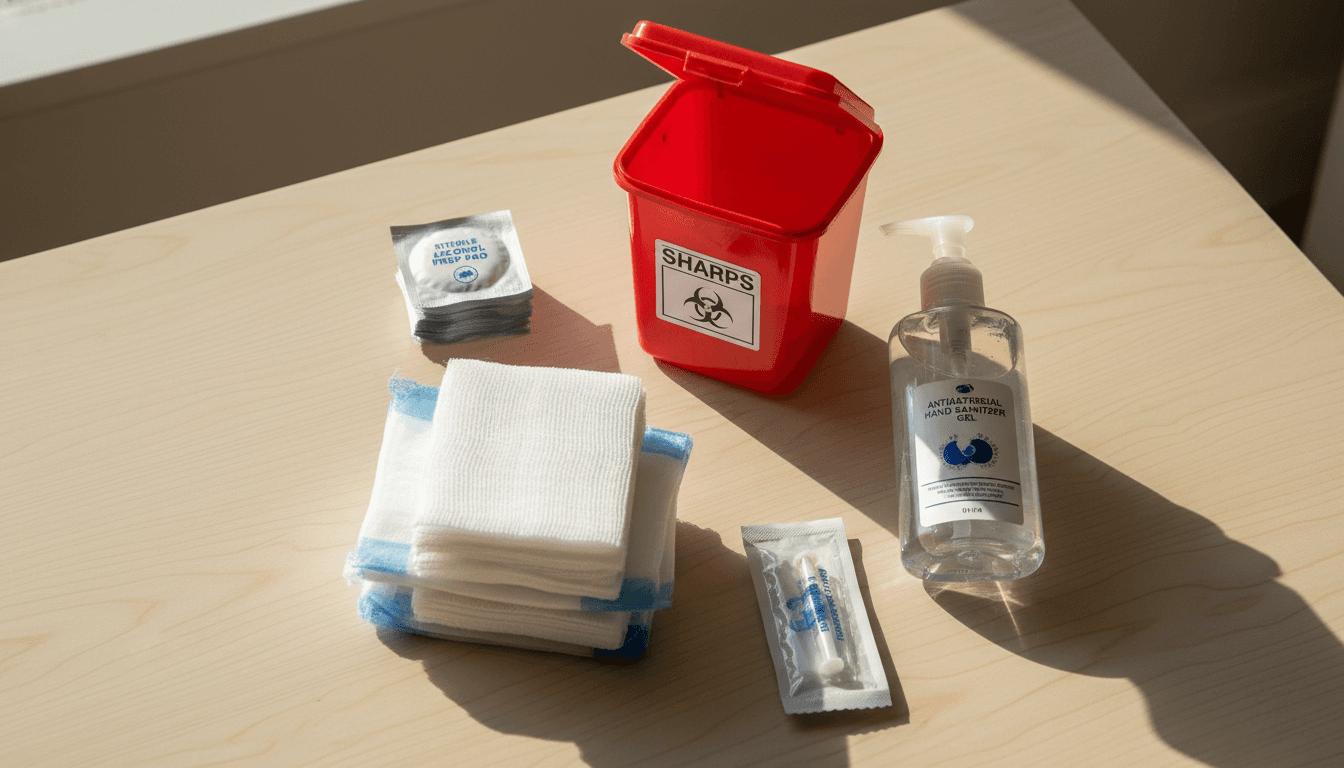
How to collect used pen needles, syringes, and lancets in an FDA-cleared sharps container and dispose of them correctly. Not medical advice.
Pre-injection checklist
- ✓Keep the sharps container within arm's reach before you inject so the needle goes straight in.
- ✓Do not recap the needle after use. Recapping is the most common cause of accidental needle-stick injuries.
- ✓Fill the container only to the marked fill line, usually about three-quarters. An overfilled container cannot be sealed safely.
- ✓Store the container out of the reach of children and pets.
Step-by-step guide
- 1
Drop the needle in immediately
Place the used needle or syringe, sharp end first, straight into the puncture-resistant container right after the injection. Do not recap, bend, or break the needle.
Pro tipAlways check the fluid is clear and colourless before injection. - 2
Use the container to the fill line
Fill only to the printed line (about three-quarters). This leaves room to seal the lid securely and permanently.
Pro tipAlways check the fluid is clear and colourless before injection. - 3
Seal the container permanently
When full, close the lid tightly per the manufacturer's instructions. Do not reopen it afterward, and do not just tape a homemade lid shut.
Pro tipAlways check the fluid is clear and colourless before injection. - 4
Find your disposal program
Use Safe Needle Disposal (safeneedledisposal.org) or call your local trash or public-health department for the right drop-off. Options include pharmacy take-back, hospital or health-department kiosks, and mail-back programs. Rules vary by state.
Pro tipAlways check the fluid is clear and colourless before injection. - 5
Never loose in trash or toilet
Never put loose needles in household trash, recycling, or the toilet. They injure sanitation workers and are not handled by water systems.
Pro tipAlways check the fluid is clear and colourless before injection.
After the injection
- Wash your hands after handling the container.
- Set out a fresh container as soon as the old one is sealed so a loose needle never sits out.
- Note your next drop-off location so the sealed container is taken in promptly.
Common mistakes
- A needle-stick injury to yourself or another person, seek medical advice to assess infection risk.
- Persistent redness, swelling, or pus at a puncture wound, possible infection.
Frequently asked questions
Can I throw used needles in the trash?+
Not loose. Place used needles in an FDA-cleared, puncture-resistant sharps container, then dispose of the sealed container through an approved program. Putting loose needles in household trash, recycling, or the toilet is unsafe and illegal in many states.
What can I use as a sharps container?+
The safest option is a designated FDA-cleared sharps container (generic or a brand such as BD). If one is not available, the FDA describes a heavy-duty plastic household container with a tight, screw-on lid as a temporary alternative, but a true sharps container is preferred and is what disposal programs expect.
Where do I drop off a full sharps container?+
Options vary by state and include pharmacy take-back, hospital or health-department drop-off kiosks, household hazardous-waste sites, and FDA-cleared mail-back programs. Use SafeNeedleDisposal.org or call your local trash or public-health department to find the right one near you.
How do I dispose of needles when I travel?+
Carry a small lockable travel sharps container. Drop used needles in immediately and dispose of them through your regular container when you return. Never put needles loose in hotel or public bins.
Should I recap the needle before disposing of it?+
No. Recapping is the most common cause of accidental needle-stick injuries. Drop the uncapped needle, sharp end first, straight into the container.