The best alcohol prep pads, compared
Alcohol prep pads for injections: which size and pack of 70% isopropyl pads to buy, plus three reviewed options for home injectors. Educational only.
ByThe InjectCompass Editorial TeamUpdatedJuly 2, 20267 min read
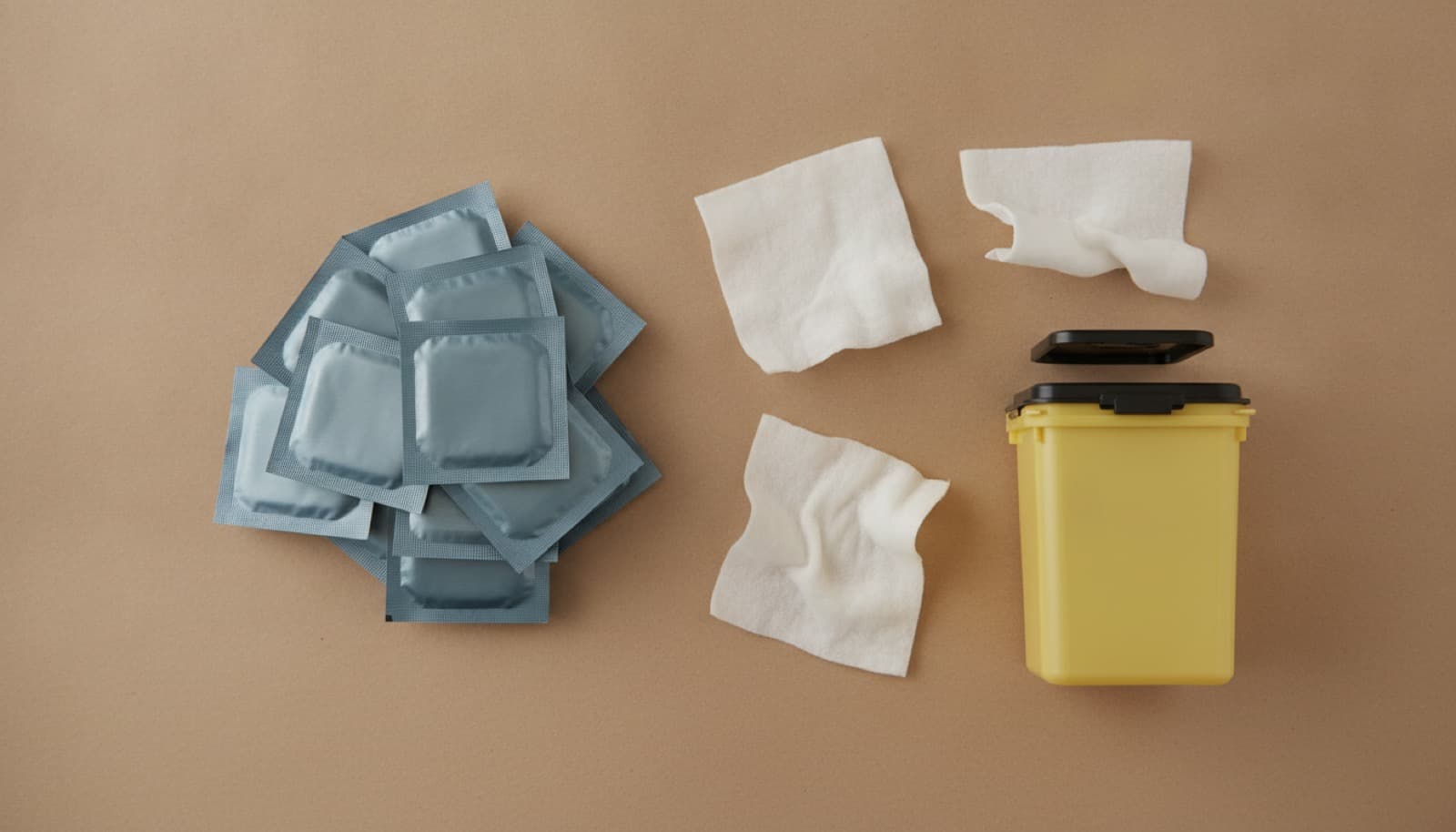
CVS Health Sterile Alcohol Prep Pads (100 ct)
For most people injecting at home, a sterile, individually foil-wrapped 70% isopropyl pad is the right answer, and there is little more to it. Three things matter: 70% isopropyl alcohol (the concentration CDC injection-safety guidance describes), individually sealed sterile single-use pads, and a pack size that matches your injection frequency. Brand and price are secondary once those three are met. The 100-count covers nearly two years of a once-weekly GLP-1 injection. Always let the alcohol air-dry fully before inserting the needle.
Referenced across the literature, in order.
- 01Our pick· $4-7
CVS Health Sterile Alcohol Prep Pads (100 ct)
The default pad and the right choice for almost anyone injecting at home. Sterile, individually foil-sealed, and 70% isopropyl alcohol, the concentration CDC injection-safety guidance describes. Single-use, one pad per injection. The 100-count lasts nearly two years for a once-weekly GLP-1 user, or about three months for daily insulin. Cheap, correct, and universally available. Let the alcohol dry fully before inserting the needle or it stings.
- 02Best value· $8-12
Medline Sterile Alcohol Prep Pads, Large (200 ct)
The same sterile 70% isopropyl spec in a larger pad and a 200-count value box, so the lowest cost per pad. The bigger pad covers a wider area in one swipe for larger injection sites. The sensible pick if you inject frequently or more than one person in the home injects. Same use: clean in a single outward spiral and let it air-dry.
- 03Most available· $5-9
Dynarex Alcohol Prep Pads, Medium (200 ct)
A widely stocked, medical-grade sterile 70% isopropyl pad in a 200-count box. The one to grab when a specific brand is out of stock. Once it is a sterile single-use 70% isopropyl pad, the brand is secondary in normal use. Reliable and inexpensive.
How this reference was written
- The technique we verified
- We verified each step against the relevant manufacturer Instructions for Use, Frid et al. 2016 (Mayo Clinic Proceedings), and the CDC injection-safety guidance. Where sources disagreed, we defaulted to the most conservative and noted the discrepancy.
- The sources we triangulated
- Peer-reviewed injection-technique literature, manufacturer package inserts, USP monographs, CDC and WHO published standards, and FDA labelling. Links and DOIs in the Sources section below. Unsourced claims are not published.
- The failure modes we tested
- We document known-wrong outcomes for the common mistakes, partial dose delivery, injection-site bruising, pen misuse, reconstitution error, and describe what the published literature says to do when they happen. The red-box call-outs are drawn from these failure modes.
- What we're still verifying
- Pen manufacturer Instructions for Use change. FDA labelling gets updated. A named credentialed reviewer (RN, NP, or PharmD) is joining the masthead by month 6. Until then, verify every technique decision with your own prescriber and the package insert that came with your medication.
What the literature answers next.
- Do I need an alcohol prep pad before every injection?
- CDC injection-safety guidance describes skin antisepsis with 70% isopropyl alcohol before parenteral administration. Some professional bodies consider disinfection non-mandatory for clean skin at home, but an individually sealed single-use pad costs almost nothing and is the safe default. Always clean visibly dirty skin. Follow your clinician's advice.
- What alcohol concentration should a prep pad be?
- 70% isopropyl alcohol is the concentration CDC injection-safety guidance describes for skin antisepsis. Higher-concentration alcohol (90% and up) evaporates too fast for full antiseptic effect. Look for the 70% isopropyl label and a sterile, individually sealed single-use pad.
- How do I use an alcohol prep pad correctly?
- Wipe the chosen site in a single outward spiral and let the alcohol air-dry fully, per CDC guidance. Do not blow on or fan the site. Inserting through wet alcohol stings and can carry the alcohol into the subcutaneous tissue. Use a fresh pad for each injection. See the subcutaneous injection guide for the full aseptic routine.
- Are cheap alcohol prep pads as good as brand-name ones?
- Once it is a sterile, individually sealed single-use pad at 70% isopropyl, a value brand performs the same for everyday use. Alcohol prep pads are a commodity once sterility and concentration match. Buy on price and pack size once the spec matches.
A new manufacturer Instructions-for-Use revision. A peer-reviewed injection-technique paper that reports a different outcome. An FDA label update. A change to USP chapter guidance. We revise this page within a week of the cited source changing and mark what changed at the bottom.
Sources
About The InjectCompass Editorial Team
The InjectCompass Editorial Team is a small group of writers working from published nursing-education literature, manufacturer package inserts, and peer-reviewed injection-technique research. Our content is reviewed against published best practice before publication. We are adding a named credentialed reviewer (RN, NP, or PharmD) to the masthead; until then, readers should verify all guidance with their own prescriber and the manufacturer package insert that came with their medication. If you spot an error, write to corrections@injectcompass.com, we want to know.
Related posts
Luer-Lock vs Slip-Tip Syringes: Which to Use
Luer-lock threads a needle on securely; slip-tip pushes on fast. How the connection differs and which suits home injections. Not medical advice.
5 min readU-100 vs U-40 Syringes: Why the Scale Matters
U-100 and U-40 syringes use different unit scales, so mixing them misdoses. How to tell them apart and why U-100 is standard. Not medical advice.
5 min readAuto-Injector vs Pen vs Vial and Syringe
Three ways to deliver a subcutaneous dose compared: convenience, dose flexibility, cost, and control. Which delivery suits you. Not medical advice.
6 min readYour First Injection, a one-page cheat sheet.
A printable, step-numbered PDF covering supplies, technique, site rotation, and the three questions to ask your prescriber. Free.
By subscribing, you agree to our Privacy Policy. One practical email per week. Unsubscribe anytime.