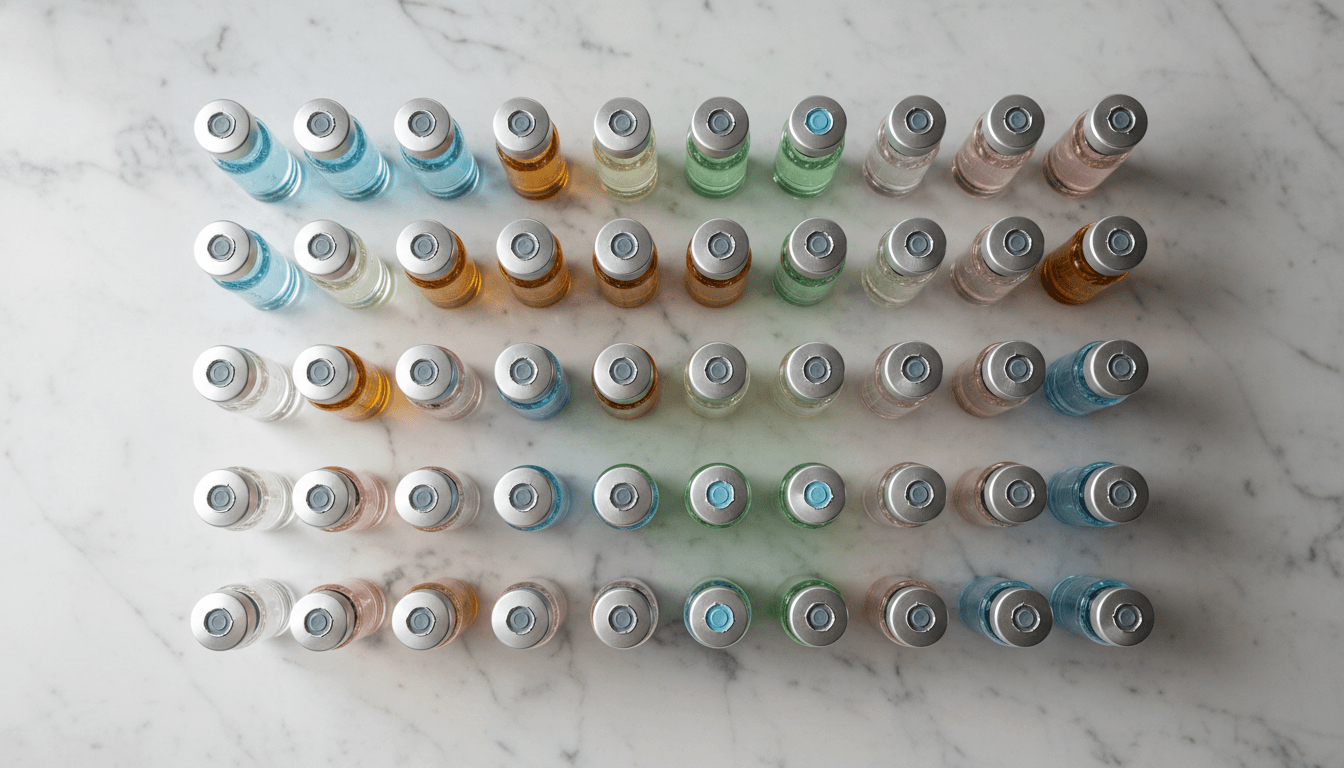
Everything on the table before you mix a peptide vial: diluent, syringes, swabs, sharps bin, and labels. Research use only. Not medical advice.
Key points
- 01The lyophilized peptide vial. Start with the sealed vial of powder and read the label for the total mass in milligrams. That number, with the water you add, sets your concentration, so confirm it before anything else.
- 02Bacteriostatic or sterile water. Bacteriostatic water suits a vial entered several times; sterile water fits a single entry. Match the diluent to how often you will draw, as covered in our bacteriostatic vs sterile water guide.
- 03A reconstitution syringe for the water. A larger syringe, often 1 to 3 mL, measures and transfers the diluent cleanly. Keeping it separate from your dosing syringe makes the water volume easy to read against the marks.
- 04Insulin syringes for dosing. U-100 insulin syringes with fine markings let you draw small, accurate volumes. Our needle-size and insulin-syringe-size guides help you pick a gauge and barrel that match your dose.
- 05Alcohol swabs and a clean surface. Swab both vial stoppers and let them dry before every entry, and work on a wiped-down surface. Our alcohol prep pad guide covers what actually matters in a swab.
- 06A sharps container and labels. Have a puncture-proof sharps bin within reach so a used needle never rests on the table, and a marker plus labels to write the mix date. See our sharps container guide for options.
Frequently asked questions
What supplies do I need to reconstitute a peptide?+
The vial, a diluent (bacteriostatic or sterile water), a reconstitution syringe for the water, insulin syringes for dosing, alcohol swabs, a sharps container, and labels for the mix date. Research use only.
Do I need two different syringes?+
It helps. A larger syringe measures and adds the water accurately, while a fine U-100 insulin syringe draws the small dosing volume. Keeping them separate reduces reading errors.
Why label the mix date?+
Reconstituted peptides have a limited window before they should be discarded. Writing the date on the vial is the only reliable way to track it; see our guide on how long a reconstituted peptide lasts.
Where does the used needle go?+
Straight into a puncture-proof sharps container, never back on the table or in household trash. Our sharps container and disposal guides cover safe options at home and while traveling.