How to give a subcutaneous insulin injection with a pen or syringe: choose a site, pinch a fold, inject, and rotate sites. Not medical advice.
Pre-injection checklist
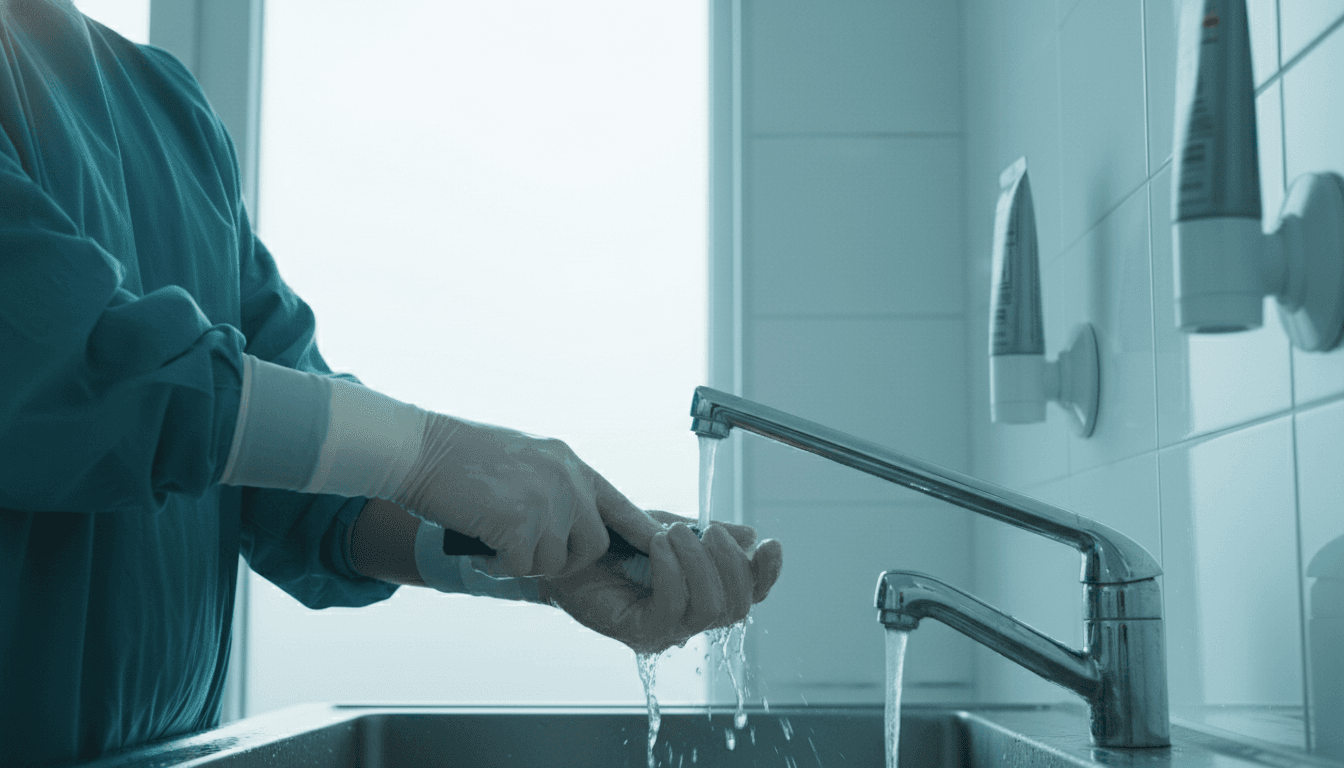
- ✓Wash your hands with soap and water and lay out all supplies on a clean surface.
- ✓Check the insulin type, concentration, and expiry. Cloudy NPH insulin is gently rolled; clear insulin is not shaken.
- ✓Choose a site (abdomen, front of the thighs, upper arm, or buttock) and rotate away from your last injection.
- ✓Attach a new needle for every injection. Reused needles are blunt and raise the risk of lipohypertrophy.
- ✓For a pen, perform a safety test (priming) until a drop of insulin appears at the needle tip.
Step-by-step guide
- 1
Wash hands and prepare supplies
Wash your hands for at least 20 seconds with soap and water. Lay out the pen or syringe, needle, alcohol pad, cotton ball, and sharps container within reach.
Pro tipAlways check the fluid is clear and colourless before injection. - 2
Dial the dose and prime the pen
Attach a new needle. On a new pen, dial 2 units and press until a drop appears (the safety test), then dial your prescribed dose. With a syringe, draw up the prescribed amount free of air bubbles.
Pro tipAlways check the fluid is clear and colourless before injection. - 3
Clean the site and let it dry
Clean the chosen site with an alcohol pad using a single outward motion. Let the skin air-dry for about 30 seconds, otherwise the injection stings.
Pro tipAlways check the fluid is clear and colourless before injection. - 4
Pinch a skin fold if needed
On a lean build or the thigh, pinch a 1 inch (2 to 3 cm) skin fold between thumb and index finger. With a 4 mm needle on an abdomen with ample subcutaneous fat, a fold is often not needed.
Pro tipAlways check the fluid is clear and colourless before injection. - 5
Insert at a 90-degree angle
Insert the needle in one steady motion at a 90-degree angle. Short needles always go straight in; a 45-degree angle is only used with longer needles on thin tissue, as your clinician demonstrated.
Pro tipAlways check the fluid is clear and colourless before injection. - 6
Inject slowly and count
Press the button or plunger smoothly all the way down. With a pen, hold the needle in the skin for at least 10 seconds so the full dose is delivered before you withdraw it straight out.
Pro tipAlways check the fluid is clear and colourless before injection. - 7
Dispose of the needle safely
Press a cotton ball to any bleeding without rubbing. Drop the needle straight into the sharps container without recapping, and log the site used.
Pro tipAlways check the fluid is clear and colourless before injection.
After the injection
- Press a clean cotton ball to the site for 10-15 seconds if there is any bleeding. Do not rub.
- Log the date and site so the next injection moves to a different area.
- Drop the used needle into an FDA-cleared sharps container immediately and do not recap it.
Common mistakes
- Signs of severe low blood sugar (shaking, confusion, sweating, reduced consciousness), treat promptly and get help.
- A site that becomes progressively red, warm, or swollen over 24-48 hours, possible infection.
- Difficulty breathing, swelling of the face, throat, or tongue, or hives, signs of serious allergic reaction.
- Repeated unexpectedly high or low readings despite correct technique, talk to your prescriber.
Frequently asked questions
What angle do I inject insulin at?+
With the short needles used today (4 to 6 mm), inject at a 90-degree angle, straight into the skin. A 45-degree angle or a skin fold is only needed with longer needles or very thin tissue to avoid muscle. Follow the technique your clinician demonstrated.
Do I need to pinch a skin fold to inject insulin?+
It depends on needle length and build. With a 4 mm needle on an abdomen with enough subcutaneous fat, a fold is usually not needed. On a lean build, the thigh, or with longer needles, lifting a fold helps land in fat rather than muscle.
Where can I inject insulin?+
Common subcutaneous sites are the abdomen (at least 2 inches from the navel), the front of the thighs, the upper outer buttock, and the upper arm. The abdomen absorbs fastest and most evenly. Rotate sites systematically to avoid lipohypertrophy.
How often should I change the pen needle?+
Use a new needle for every injection. Reused needles are blunt, bent, and raise the risk of painful injections and lipohypertrophy. See our post on how often to change a pen needle.
Should I disinfect the site before injecting?+
Clean visibly dirty skin with an alcohol pad and let it dry fully before inserting the needle. For clean skin at home, several professional bodies say disinfection is not strictly required; follow your clinician's advice.
Sources
- Frid AH et al. 2016. New Insulin Delivery Recommendations. Mayo Clinic Proceedings 91(9):1231-1255.
- American Diabetes Association. Standards of Care, insulin injection technique.
- Forum for Injection Technique (FIT). UK Injection and Infusion Technique Recommendations.
- CDC. Diabetes, insulin and injection safety.