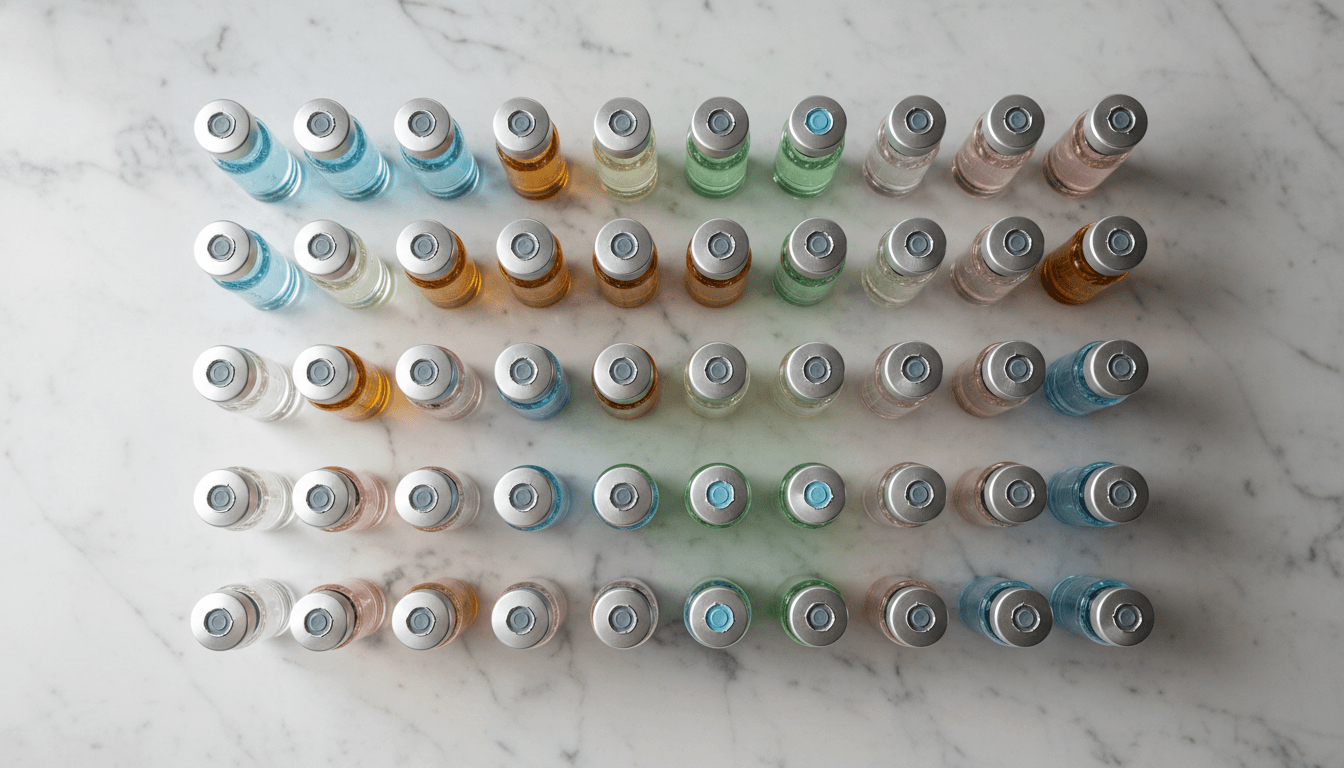
How long a reconstituted research peptide stays stable, why refrigeration and the diluent matter, and when a vial should be discarded.
Key points
- 01Reconstitution starts a stability clock. Lyophilized (freeze-dried) research peptides are stable as a dry powder, but pharmaceutical stability literature describes that once liquid is added the compound begins to degrade over time. How long it stays usable depends on the peptide, the diluent, and the storage temperature. This page describes handling in a research context and is not medical advice.
- 02Bacteriostatic water buys weeks; sterile water does not. Bacteriostatic water for injection contains 0.9% benzyl alcohol that suppresses microbial growth, which is why USP references describe it for multi-dose vials. Sterile water lacks that preservative and is treated as single-use. The guide comparing bacteriostatic and sterile water explains why the diluent changes the usable window.
- 03Refrigeration at 2 to 8 degrees Celsius is the norm. Once reconstituted, the vial is typically stored in a refrigerator rather than at room temperature, since cold slows degradation. The peptide storage temperature guide covers the 2 to 8 degrees Celsius range, keeping the vial out of the freezer, and protecting it from light.
- 04There is no single shelf-life number. Beyond-use windows reported in stability literature vary by compound and are the subject of ongoing published research, so a fixed number for every peptide does not exist. Label each vial with the reconstitution date, follow the handling information supplied with the specific compound, and do not assume one peptide's window applies to another.
- 05Inspect before every draw. Cloudiness, visible particles, floating flakes, or a color change in a solution that should be clear are described as reasons to discard, as the guide on drawing up medication from a vial notes. Reconstituted solution that has changed appearance should not be used, regardless of the date on the label.
- 06Freeze-thaw cycles and light shorten the window. Repeated freezing and thawing, and prolonged light exposure, are described in peptide-handling literature as degrading many peptides. Keeping the vial cold and dark, and avoiding the freezer for the reconstituted solution, protects stability across the days it is in use.
Frequently asked questions
How long does a reconstituted peptide last?+
There is no universal number. Pharmaceutical stability literature describes beyond-use windows that vary by compound, diluent, and temperature. Reconstituted with bacteriostatic water and refrigerated at 2 to 8 degrees Celsius, many peptides are handled over a period of weeks, but follow the handling information for the specific compound and discard sooner if the solution changes.
Does a reconstituted peptide need to be refrigerated?+
Yes, refrigeration at 2 to 8 degrees Celsius is the norm once liquid is added, because cold slows degradation. The peptide storage temperature guide covers the range, keeping the vial out of the freezer, and protecting it from light. Room-temperature storage shortens the usable window.
How can I tell a reconstituted peptide has gone bad?+
Inspect before every draw. Cloudiness, visible particles, flakes, or a color change in a solution that should be clear are described as reasons to discard. Appearance changes override the date on the label; a vial that looks off should not be used.
Does the type of water change how long it lasts?+
Yes. Bacteriostatic water contains a preservative that suppresses microbial growth, which is why USP references describe it for multi-dose vials, while sterile water is treated as single-use. The guide comparing bacteriostatic and sterile water explains the difference.
Can I freeze a reconstituted peptide to make it last longer?+
Peptide-handling literature describes repeated freeze-thaw cycles as degrading many peptides, so the reconstituted solution is generally kept refrigerated rather than frozen. Label the vial with the reconstitution date and follow the handling information for the specific compound.
Sources
- USP General Chapter <797>. Pharmaceutical Compounding - Sterile Preparations
- USP. Bacteriostatic Water for Injection monograph
- Manning MC et al. 2010. Stability of Protein Pharmaceuticals: An Update. Pharmaceutical Research 27(4):544-575.
- FDA. Compounding: Bulk Drug Substances Used in Compounding (503A review)