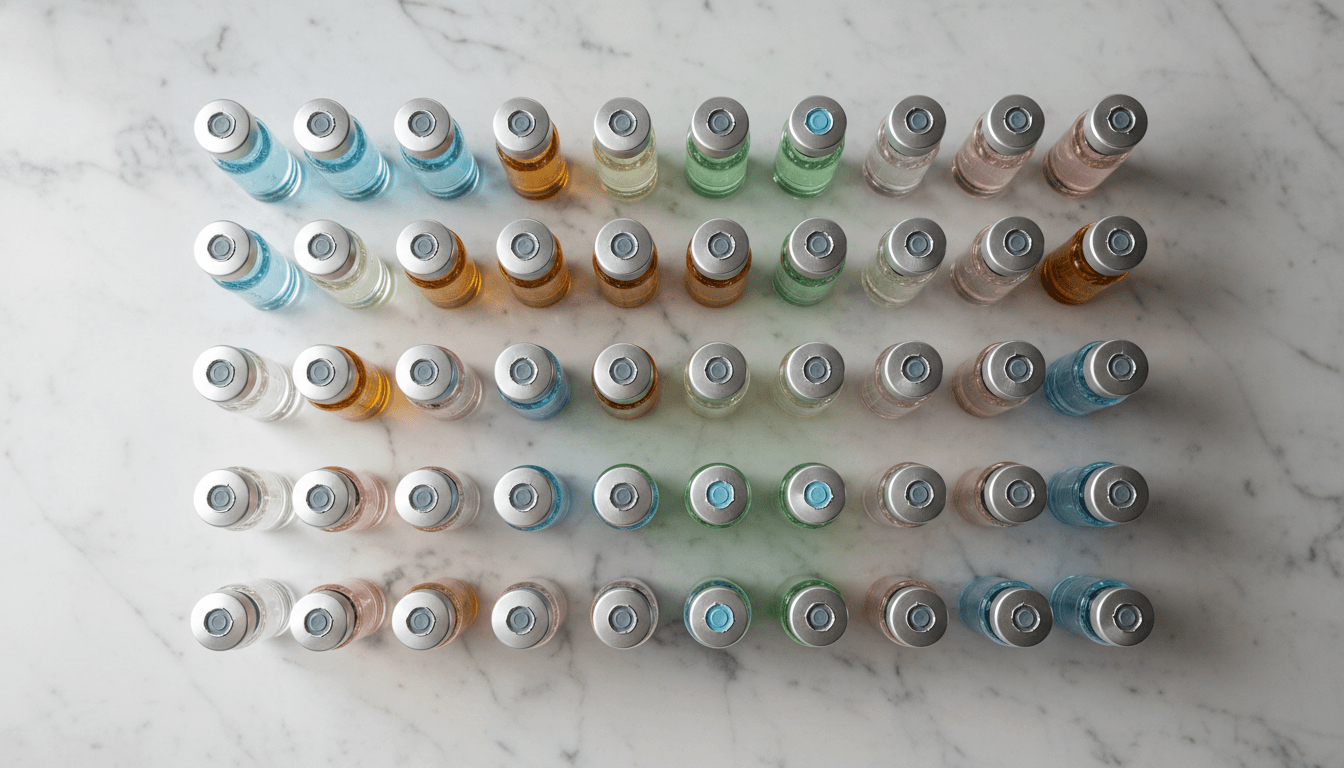
Why a reconstituted research peptide turns cloudy, which causes are cosmetic and which mean discard, and how to reduce it. Research context only.
Key points
- 01Reconstitution should yield a clear, colorless solution. Pharmaceutical handling literature describes a correctly reconstituted peptide solution as typically clear and colorless. Cloudiness is a signal that deserves an explanation before you draw. This page describes handling in a research context and is not medical advice.
- 02Cloudiness can mean the peptide has not fully dissolved yet. A freeze-dried powder does not dissolve instantly. Just after the diluent is added, the liquid can look cloudy while the compound disperses. Let the vial sit undisturbed and swirl it gently; if it clears over a few minutes, that was incomplete dissolution, not spoilage.
- 03Foam and micro-bubbles from shaking look like cloudiness. Vigorous shaking whips in air and creates foam and fine bubbles that read as milky and can also damage peptides. Handling literature describes gentle swirling rather than shaking. If the milky look clears once the foam settles, that was air, not a problem with the compound.
- 04Cloudiness with particles or flakes is a discard signal. If the solution stays cloudy or shows visible particles, floating flakes, or strands, references on drawing up from a vial describe that as a reason to discard. A solution that does not clear after reasonable time and gentle swirling should not be used.
- 05A change from clear to cloudy over time signals degradation. If the solution was clear at first and turns cloudy later, stability literature describes this as a possible sign of degradation or contamination, especially with storage outside the refrigerator. The guide on how long a reconstituted peptide lasts covers the stability clock that starts at reconstitution.
- 06Diluent and technique: add slowly down the wall, then swirl. Handling literature describes running the diluent slowly down the inner wall of the vial rather than jetting it directly onto the powder, then swirling gently. The guide comparing bacteriostatic and sterile water explains why the diluent you choose matters.
- 07Temperature: a cold vial from the fridge can look hazy briefly. A vial taken straight from refrigeration can look slightly hazy from condensation on the glass or a temporary cold haze. Let it reach room temperature for a few minutes and re-check before you judge it.
- 08When in doubt, discard rather than draw. Nursing and pharmacy reference practice describes that if a solution that should be clear does not clear after reasonable time and gentle swirling, it is discarded rather than used. Appearance overrides the date on the label.
Frequently asked questions
Why is my peptide cloudy after reconstitution?+
Common causes are incomplete dissolution just after adding the diluent, air whipped in by shaking, or a brief cold haze from a refrigerated vial. If it clears after gentle swirling and a few minutes, it was usually harmless. If it stays cloudy or shows particles, that is a reason to discard.
Can I still use a cloudy reconstituted peptide?+
The reference practice is that a solution which should be clear and does not clear after reasonable time and gentle swirling is not used. Particles, flakes, or a change from clear to cloudy are reasons to discard. Appearance overrides the date on the label.
Does shaking mean I have to start over?+
Not necessarily. Shaking whips in air and creates foam and bubbles that look milky; if the foam settles and the solution turns clear, the look was usually just air. Shaking can still damage peptides, so the literature describes gentle swirling rather than shaking going forward.
How do I keep the solution from turning cloudy in the first place?+
Add the diluent slowly down the inner wall of the vial rather than jetting it onto the powder, swirl gently instead of shaking, allow enough time to dissolve, and store the vial cold and dark. The diluent you choose also matters.
Is a cold vial that looks hazy a problem?+
Not necessarily. A vial taken straight from the fridge can look slightly hazy from condensation or a temporary cold haze. Let it reach room temperature for a few minutes before judging it. Persistent cloudiness or particles is a reason to discard.
Sources
- USP General Chapter <797>. Pharmaceutical Compounding - Sterile Preparations
- USP. Bacteriostatic Water for Injection monograph.
- Manning MC et al. 2010. Stability of Protein Pharmaceuticals: An Update. Pharmaceutical Research 27(4):544-575.
- FDA. Compounding: Bulk Drug Substances Used in Compounding (503A review).